Key takeaways
- Putty is part of surface preparation, not a replacement for fixing damp or structural defects.
- Choose the product according to the surface and project requirement.
- Follow recommended coats, drying time and sanding instructions.
What does wall putty do?
Putty is used to improve surface smoothness and help reduce minor irregularities before painting. It can create a more even base for primer and finishing coats when applied according to the manufacturer’s system.
Putty is primarily a finishing-preparation material. It cannot correct major structural movement, active leakage or severely damaged plaster. Those issues should be repaired first so that the finishing system is built on a stable surface.
When should you use it?
Putty is commonly considered for new plaster and surfaces where a smoother finish is required. Before application, remove loose particles and address major cracks, leakage or dampness separately.
For a professional result, painters should keep the surface clean and apply the product evenly. Excessive thickness, insufficient drying or poor sanding can show through the final paint, even when the topcoat itself is good quality.
Basic application sequence
A typical sequence is: clean the surface, repair defects, apply the recommended putty coats, allow adequate drying, sand the surface and remove dust before primer. Exact coat thickness and drying time vary by product.
Application conditions matter. Temperature, humidity and substrate condition can influence drying. The product label should always take priority over generic advice because different formulations can have different application windows.
Interior and exterior considerations
Exterior surfaces experience rain, sunlight and temperature changes, so the complete exterior system matters. For interiors, the desired smoothness, finish and maintenance requirements may drive product choice.
For exterior work, the full system should be considered together because rain and temperature changes affect the wall after completion. Interior work may place more emphasis on smoothness, appearance and maintenance.
Lado Paints wall putty
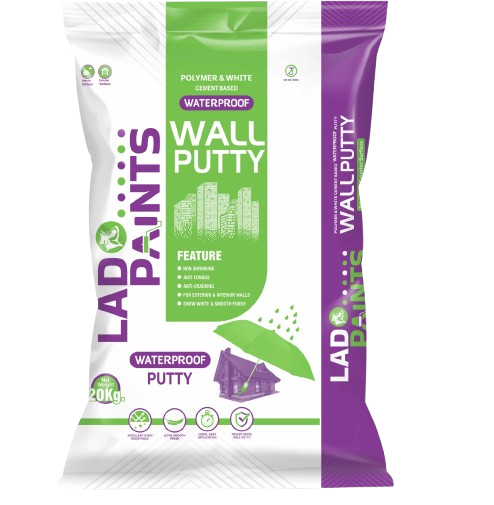
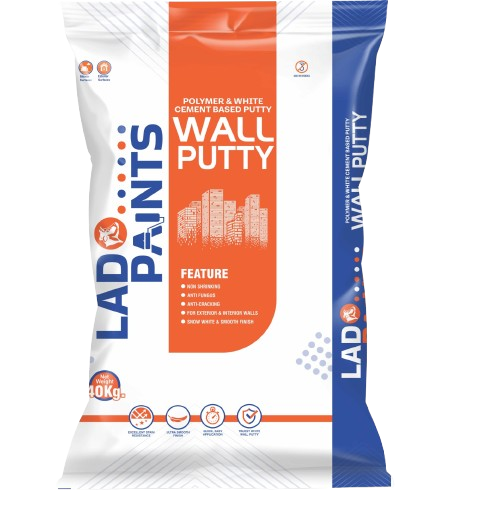
Lado Paints offers wall-putty products for surface preparation. See the product pages for current product information and use the enquiry option when you need technical or commercial guidance.
When comparing Lado Paints products, use the product page for the current specification and contact the company if you need guidance for a particular substrate or project size.
Frequently asked questions
Does wall putty fix dampness?
No. Active dampness or water ingress should be diagnosed and repaired before applying a finishing system.
How many coats of putty are needed?
The number and thickness of coats depend on the product and substrate. Follow the manufacturer’s application instructions.
Should primer be applied after putty?
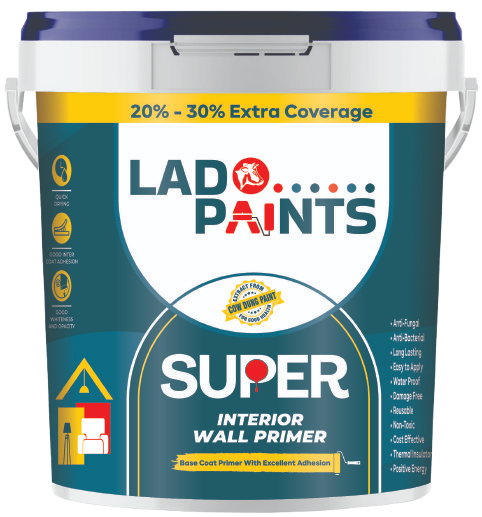
In many masonry systems, putty is followed by sanding, dust removal and a compatible primer before the finishing paint. Confirm the recommended system for the product.
Need help choosing a product?
Tell us about your wall, room or project and the Lado Paints team can guide you toward the relevant product information.
Send an enquiry →